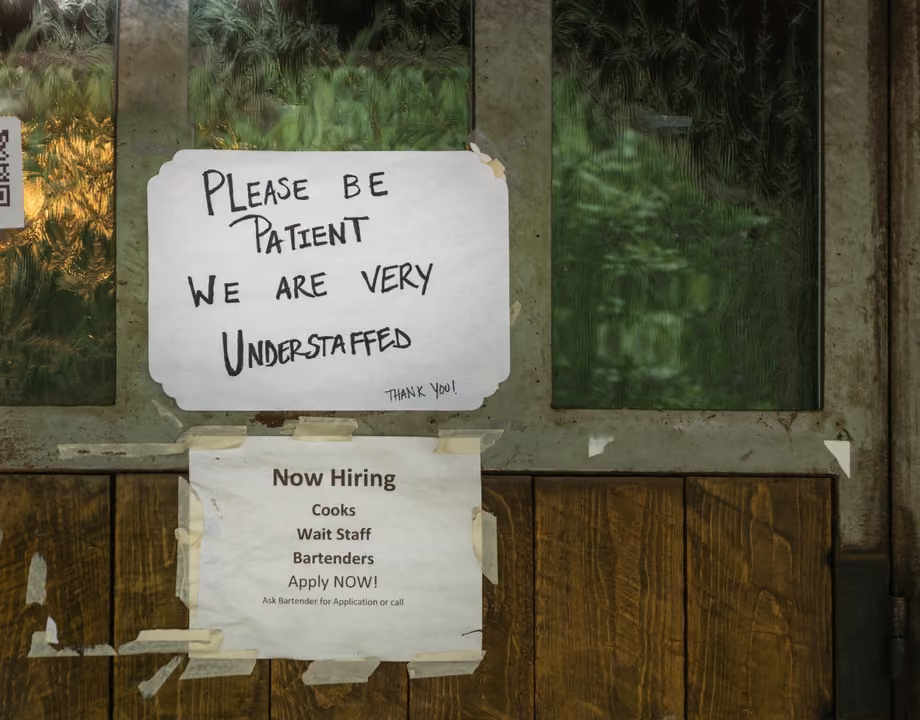

Basically, understaffed is a synonym for short-staffed. It means that a business doesn’t have enough employees to operate satisfactorily.
Basically, understaffed is a synonym for short-staffed. It means that a business doesn’t have enough employees to operate satisfactorily.
While business owners can save money by having fewer employees, operating with insufficient personnel can hurt job satisfaction as well as the company’s reputation.
You need to address understaffing issues early to prevent damage to your customer base and employee morale.
ACCESS OUR FREE EBOOK: Overcoming talent shortages with recruitment expert Barbara Bruno
What does it mean to be understaffed?
Before discussing staffing issues, you need to have a good understanding of what it means to be understaffed.
Ideally, a business should have enough employees to perform all the tasks necessary to keep the different business processes running and meet organisational goals. There shouldn’t be any rushes or delays, and the business should deliver an optimal experience for its customers and employees.
A business without enough employees to achieve its goals is understaffed. This issue has multiple consequences:
- Employees are typically stressed and unhappy. It leads to high employee turnover, which further contributes to understaffing.
- Customers aren’t happy because there aren’t enough employees to deliver quality customer service.
- The low number of employees can create a dysfunctional and even toxic work environment.
How does understaffing occur?
Understaffing is a prevalent issue with 50% of US workers stating that their company has a shortage of employees. It’s a complex issue with several possible causes:
- The job market is competitive for recruiters and talent acquisition professionals. Business creation slowed down during the pandemic, but Q1 2021 saw 351 million new businesses open in the US alone. Our JobAdder data has found that job growth is rising quickly, while applications are falling.
- This shortage of qualified applicants is significant in some industries but it’s also a widespread issue, with 87% of businesses across the globe saying that they are experiencing a skills gap or expect to in a few years.
- The pandemic has worsened existing issues like burnout, while inflation is causing workers to reconsider keeping their current job if their employer doesn’t increase their salary.
- With the rise of the gig economy, some employees are rethinking the way they approach work and opting for more flexible options over a traditional job.
- Some businesses find themselves understaffed because workers walk out, often due to a negative environment.
Examples of understaffing
Understaffing is worse for some industries than others. Staffing problems have been chronic for sectors like healthcare or hospitality.
- Healthcare: Understaffed hospitals are a chronic problem. The healthcare sector can't find enough qualified applicants, especially in rural areas. Labour challenges are now the top issue hospitals face.
- Restaurants: With a fast-paced environment and strict schedule, it can be difficult for restaurants to find applicants. This sector has always had a high turnover rate. Plus, as many restaurants closed during the pandemic, workers are seeking employment elsewhere to get higher pay.
- Education: Even before the pandemic, schools were experiencing staff shortages; now, the pandemic has made staff shortages worse. Forty per cent of district leaders say staffing issues are severe, often due to pay and demanding working conditions.
- Small businesses: Labour is a common challenge for small businesses that can't compete with the pay or benefits packages offered by larger companies.
Why is understaffing bad for business?
Staffing issues can affect every business process. Its consequences are complex and multilayered:
- Having fewer employees around often translates into a poor experience for customers.
- Understaffing means employees have a higher workload, which results in increased stress levels and poor mental health, leading to a high turnover rate.
- Due to being overworked and stressed, workers often do poor quality work.
- In the long term, rushed work and poor experiences can hurt the brand's reputation.
- Businesses often respond to understaffing by rushing the hiring process. It can result in candidates who aren’t a good match for the organisation.
- Understaffing makes it challenging to meet organisational goals since employees struggle to stay afloat.
How to prevent and remedy understaffing at your organisation
There are a few strategies businesses can adopt to address understaffing and deal with talent shortages.
Maintain open communication with your team
Creating an environment that fosters communication with your team is essential. It will make you more responsive and give you insights into labour issues you might not know about.
You’ll know if employees feel stressed or overworked and communication might reveal some processes you could improve. Plus, you’ll know when you need new team members to keep up with the workload.
Communication can help create a positive environment and make employees feel more valued. You’ll be able to address issues before they make the work environment feel toxic, whether they’re related to staffing or not.
Practice proactive recruiting
One of the best ways of addressing understaffing is to adopt a proactive recruiting strategy. Instead of waiting for a position to open up to start searching for a candidate, you should have a process in place to develop a network of potential hires.
Keep your careers page up to date, be active on LinkedIn and other social media platforms, take part in industry events and encourage referrals from current employees. An Applicant Tracking System or ATS can help you with this process and ensure you can easily search your talent pool or database.
Improve your hiring process to make better hires
A bad hire can be a costly and time-consuming mistake. Review your application and interviewing practices to increase your chances of finding candidates who will fit in and stay.
Besides creating detailed job descriptions and establishing clear requirements for candidates, you should rethink the questions you ask during the interview.
It’s important to find out more about an applicant’s past job experiences, but you should also find out what motivates them and how they handle stress and foster teamwork.
Utilise staffing software
Staffing software like an ATS can help you manage your talent pool and develop a bank of applicants and candidates, so you have an organised talent pool of interested job seekers at the ready whenever you need to make a new hire.
With ATS software, you can advertise jobs to multiple job boards with a click of a button, streamline and track communication history and automatically provide updates about a job status to candidates, hiring managers or clients.
Signs your organisation is understaffed
Is your business understaffed? These signs will help you determine if you need to take action:
- You’re seeing an uptick in customer complaints, indicating that the quality of the customer service you offer is decreasing.
- Employees are expressing lower levels of job satisfaction. More people are quitting to pursue other employment opportunities.
- Managers have to schedule overtime to keep up with the workload.
- You’re seeing a decrease in work quality as workers rush.
- Your employees are working longer hours, avoiding taking breaks or struggling with work-life balance.
Walking the line between understaffing and overstaffing
Many businesses are currently struggling with not having enough staff. However, overstaffing is another type of staffing issue you should be aware of. While you want to make sure you have enough staff so that daily tasks can be accomplished smoothly, you don’t want to waste money on an extra pair of hands you don’t need.
To prevent instances of both understaffing and overstaffing, be sure to keep the lines of communication between you and your staff open.
If people report higher stress and feel overworked or unable to do their job well, your business is experiencing understaffing. On the other hand, if you see employees standing around with nothing to do or see more disengagement, overstaffing could be an issue.
Enhance your recruiting strategy with JobAdder
Recruitment software can help you address staffing issues by providing you with the tools you need to manage talent and find the right candidates. With JobAdder’s ATS, you can build a better recruitment process and streamline hiring to be more responsive when a staffing issue arises.